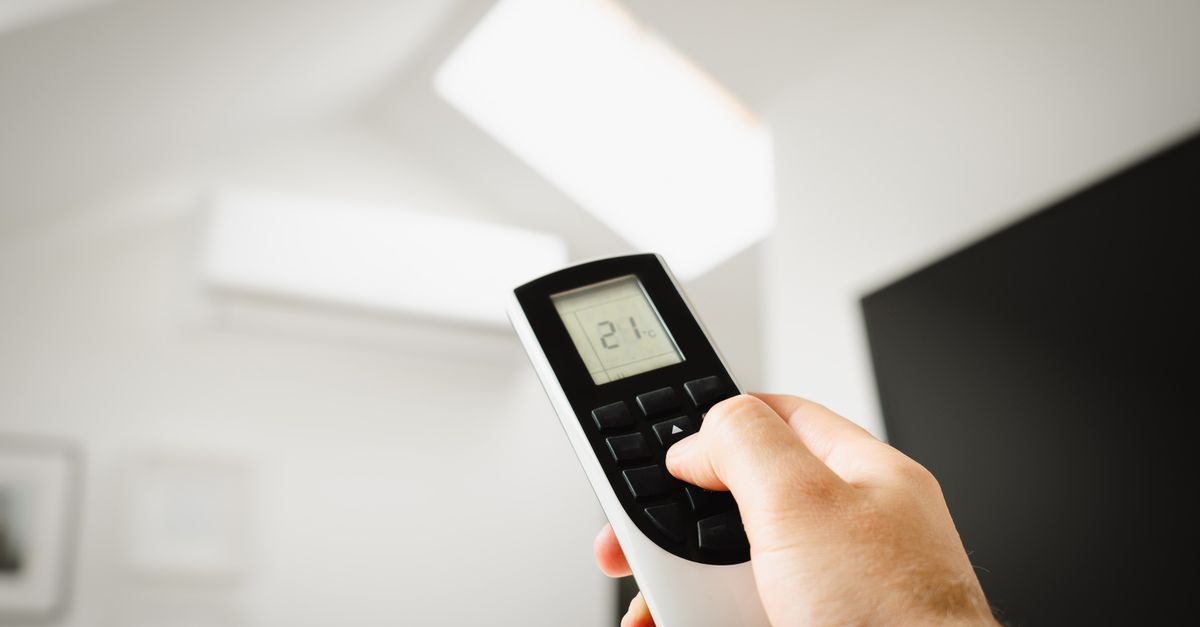
The 60-Degree Rule for Home Heating and Cooling: Why It's Often Misunderstood
You’ve likely heard the advice: maintain a 60-degree difference between your indoor and outdoor temperatures for optimal home heating and cooling. It sounds logical, a simple, memorable rule that promises both comfort and energy savings. I followed it for years, diligently adjusting my thermostat as the seasons shifted, convinced I was a master of home efficiency. The problem? My energy bills never quite aligned with the promises, and my comfort levels fluctuated more than I cared to admit. What I discovered, through years of managing my own home and helping countless others optimize theirs, is that the ‘60-degree rule’ is a well-intentioned but fundamentally flawed guideline. It misses critical nuances that truly impact your home’s performance and your wallet.
Key Takeaways
- The popular ‘60-degree rule’ for indoor-outdoor temperature difference is oversimplified and often ineffective for true energy efficiency.
- Your home’s insulation, window quality, and airtightness are more critical factors than a fixed temperature differential.
- Prioritize strategic thermostat programming based on occupancy, setback temperatures, and humidity control for genuine savings.
- Embrace smart thermostat features and professional energy audits to tailor solutions to your home’s unique needs.
The Flaw in the Fixed Differential Logic
The fundamental issue with the 60-degree rule (or any fixed temperature differential advice) is its failure to account for the dynamic nature of both your home and the environment. It treats every house as a perfectly insulated, uniformly built box, and every day as a stable, predictable climate event. In reality, neither is true. In my own experience, when I first bought my 1970s split-level, applying the 60-degree rule meant running my AC constantly during summer heatwaves and still feeling clammy indoors. In winter, trying to maintain a mere 60-degree difference when it was -20°F outside meant my furnace was perpetually firing, struggling to reach a comfortable 70°F, costing me a small fortune in natural gas. The rule gave me a false sense of control while my actual energy consumption remained stubbornly high. It felt like trying to use a one-size-fits-all wrench on every bolt in the house – some might turn, but most just stripped.
The real world is far more complex. Humidity, solar gain (how much heat your home absorbs from the sun), wind chill, and even the direction your home faces play enormous roles. A perfectly comfortable 72°F indoors when it’s 82°F outside with low humidity feels vastly different than the same 72°F when it’s 92°F outside with 90% humidity. The fixed differential simply ignores these critical variables, leading to either discomfort or wasted energy as you overcompensate. My biggest mistake was assuming the rule was prescriptive, rather than recognizing it as a rough, often inaccurate, generalization.
Why Your Home’s Envelope Matters More Than a Number
What truly changed everything for me was shifting my focus from the ‘60-degree rule’ to understanding my home’s thermal envelope. This refers to everything that separates the inside of your house from the outside: walls, insulation, windows, doors, roof, and foundation. If your thermal envelope is leaky and poorly insulated, no amount of fiddling with a 60-degree differential will make a significant impact on your bills or comfort. You’re effectively trying to control the temperature in a colander. I spent hundreds on energy bills annually trying to force a differential, only to learn my home was hemorrhaging conditioned air.
Consider this: a well-insulated home with modern, low-emissivity windows can comfortably maintain a much larger temperature differential with the outside than an older home with single-pane windows and minimal wall insulation. For example, my neighbor, whose home was built to modern energy efficiency standards, can keep his indoor temperature at 72°F when it’s 95°F outside, achieving a 23°F differential, while his AC runs far less than mine does with a smaller differential. This isn’t about magic; it’s about physics. His walls and windows are effectively blocking heat transfer, allowing his HVAC system to maintain the desired temperature with less effort. Before you obsess over arbitrary temperature rules, invest in understanding where your home’s conditioned air is escaping or where unwanted external temperatures are penetrating. A professional energy audit, which I eventually invested in, revealed significant air leaks around my recessed lighting and an unsealed attic hatch – issues that no thermostat setting could ever fix.
Strategic Thermostat Programming for Real Savings
The most effective strategy for managing home heating and cooling isn’t about maintaining a fixed indoor-outdoor differential, but rather about strategic setback temperatures and occupancy-based adjustments. The mistake I see most often is people trying to maintain a constant indoor temperature, even when they’re not home or asleep. This is where significant energy waste occurs. Your HVAC system works hardest to change the temperature, not to maintain it once it’s reached.
What actually works is programming your thermostat (or using a smart thermostat’s features) to adjust temperatures when energy isn’t needed. For heating, this means setting your thermostat lower when you’re away or asleep. For cooling, it means setting it higher. For example, I program my thermostat to drop to 65°F during the day when everyone is at work/school in winter, and then return to 70°F an hour before we get home. Similarly, in summer, it climbs to 78°F during the day, dropping to 74°F in the evening. This approach, recommended by the Department of Energy, can save you 10% on your annual heating and cooling costs by simply adjusting your thermostat 7°-10°F from its normal setting for 8 hours a day. This is a far more impactful approach than adhering to a rigid differential that ignores whether anyone is even home to benefit from the conditioned air. It’s about being intelligent with your energy use, not just guessing at a number.
Humidity Control as a Comfort Multiplier
Another critical factor the ‘60-degree rule’ completely overlooks is humidity. My biggest revelation came when I realized that comfort isn’t just about temperature; it’s profoundly influenced by relative humidity. In humid climates, a higher indoor temperature can feel just as comfortable, or even more comfortable, than a lower temperature if the humidity is effectively managed. For years, I cranked down my AC to 72°F in the summer, trying to hit that arbitrary differential, yet I still felt sticky. It was only when I installed a whole-home dehumidifier (and later, upgraded to an AC unit with a variable-speed compressor that also dehumidifies more effectively) that I truly understood the power of humidity control.
Reducing indoor humidity makes the air feel cooler and more comfortable, allowing you to set your thermostat a few degrees higher without sacrificing perceived comfort. Every degree you raise your thermostat in cooling mode can save 1-3% on energy consumption. So, by maintaining an indoor relative humidity of 40-50%, you might comfortably set your AC to 76°F or 78°F, rather than 72°F, and still feel dry and cool. This not only saves energy but also prevents mold growth and improves indoor air quality. It’s a win-win that fixed temperature rules simply can’t account for, yet it has had a massive impact on both my comfort and my energy bills. Prioritizing dehumidification over brute-force cooling is a game-changer.
The Smart Thermostat Advantage and Energy Audits
If you’re still relying on a basic, non-programmable thermostat or rigidly adhering to outdated rules, you’re missing out on significant opportunities. Modern smart thermostats, in my experience, are far more than just fancy gadgets; they are intelligent energy managers. Features like geofencing (which detects when you leave or approach home), occupancy sensors, and learning algorithms (which adapt to your schedule and preferences over time) can automate strategic temperature setbacks and optimize energy use without you constantly thinking about it. My Nest thermostat, for instance, learned my family’s habits within a few weeks, automatically adjusting temperatures based on our presence and even considering outdoor weather patterns. This removed the mental load of manual programming and delivered consistent savings.
Beyond smart tech, a professional home energy audit is perhaps the single most important investment you can make if you’re serious about optimizing your home’s efficiency. It’s not just about a report; it’s about a diagnostic deep dive. Auditors use tools like blower door tests (to measure air leakage) and infrared cameras (to pinpoint insulation deficiencies and thermal bridges) to create a personalized blueprint for improvements. For my own home, the audit revealed that my attic insulation was unevenly distributed and my main ductwork had multiple leaks in unconditioned spaces. Addressing these issues with targeted air sealing and insulation improvements had a far greater impact on my energy bills and overall comfort than any thermostat strategy I had tried before. It transitioned me from guessing at a generic rule to implementing precise, data-driven solutions tailored to my specific home.
Frequently Asked Questions
What is the actual recommended indoor temperature for cooling in summer?
While personal comfort varies, the Department of Energy recommends setting your thermostat to 78°F (26°C) when you’re home in the summer to balance comfort and energy savings. However, with effective dehumidification, many find 76-78°F perfectly comfortable.
What is the actual recommended indoor temperature for heating in winter?
For heating, the Department of Energy suggests 68°F (20°C) when you’re awake and home. You can lower it by 7-10°F when asleep or away to save even more energy.
Can extreme temperature differences damage my HVAC system?
Constantly trying to maintain an extremely large temperature differential can force your HVAC system to run continuously, leading to excessive wear and tear over time. It can also lead to short cycling, where the unit turns on and off too frequently, reducing efficiency and potentially shortening its lifespan. Prioritizing smart programming and home envelope improvements is healthier for your system.
How does insulation play a role in optimal heating and cooling?
Good insulation (in walls, attic, and floors) acts as a barrier, slowing down the transfer of heat into or out of your home. This allows your HVAC system to maintain your desired indoor temperature with less effort, reducing run times and energy consumption, regardless of the outdoor temperature.
Is it better to turn off my AC/heat when I leave or just adjust the temperature?
It’s generally more energy-efficient to adjust your thermostat (set it higher for cooling, lower for heating) rather than completely turning off your system. While turning it off might seem to save more, your system will have to work much harder to bring the temperature back to your desired comfort level, potentially using more energy overall. Strategic setbacks are the sweet spot.
Conclusion
The 60-degree rule, while catchy, is an oversimplified relic in an era where home energy efficiency demands more nuanced understanding. My journey from blindly following this rule to implementing a data-driven approach, focusing on my home’s envelope, strategic programming, and humidity control, has dramatically reduced my energy bills and significantly increased my family’s comfort. Instead of chasing a generic number, invest in understanding your home as a unique system. Start with a programmable or smart thermostat, address obvious insulation gaps, and consider a professional energy audit. Your wallet, your comfort, and your HVAC system will all thank you for it.
Written by Marcus Thorne
Finance & Home Management
With a background in financial journalism, Marcus demystifies complex economic concepts for everyday application.
You Might Also Like
Lifestyle
Secure Your Home Network After a Firmware Update Without Reconfiguring Every Device
Lifestyle
Six Inches of Topsoil: Why That Number Won't Build a Thriving Garden
Lifestyle