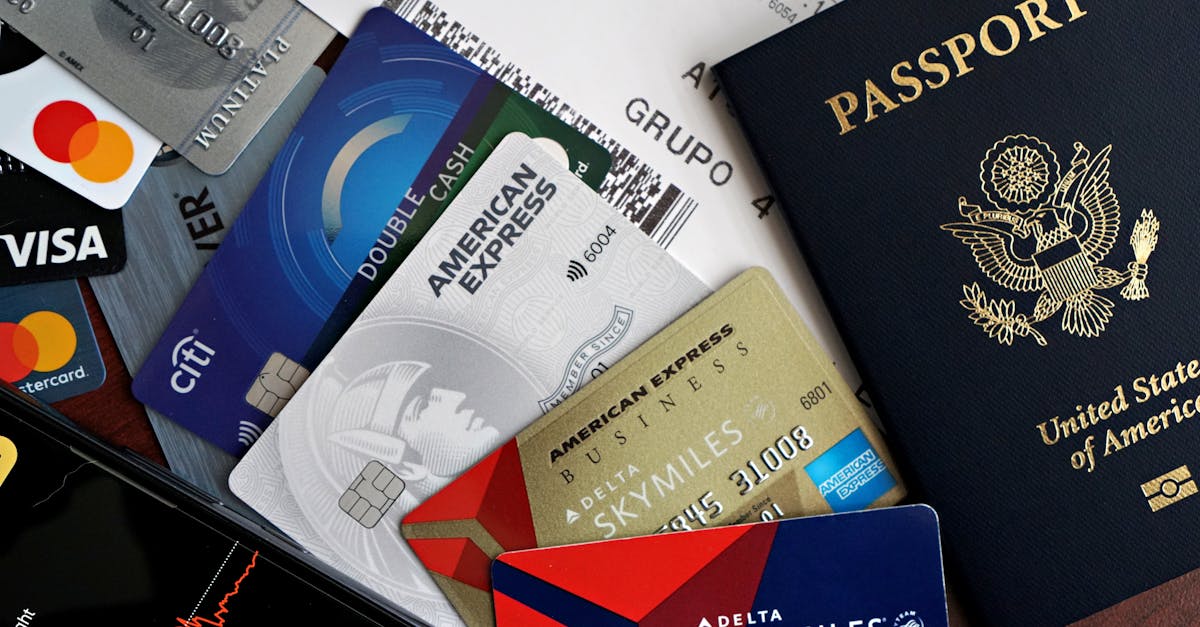
Why Most Travel Rewards Programs Are a Trap (And The 'Strategic Simplicity' Approach That Actually Works)
You’re staring at an airline credit card offer, dazzling you with promises of free flights, hotel stays, and exclusive upgrades. The sign-up bonus alone—50,000 points, 80,000 points, sometimes even 100,000 points—feels like a golden ticket to your next dream vacation. You sign up, excited to game the system, to finally travel like the pros without breaking the bank. Fast forward a year, and those points are sitting there, a digital phantom in your account. The flight you want costs double the points you expected. The hotel blackout dates perfectly align with your vacation. Suddenly, the ‘free’ travel feels more like a complicated puzzle with constantly shifting pieces, demanding more time and mental energy than it’s worth. You’re not alone. I’ve been there, chasing the next big bonus, only to find myself swimming in a sea of annual fees, expiring points, and redemption charts that require a degree in advanced calculus. What I’ve learned is that for most people, the intricate world of travel rewards isn’t a shortcut to cheap travel; it’s a meticulously crafted trap designed to keep you spending and constantly seeking the next ‘deal.’
Key Takeaways
- Most travel rewards programs are designed with complex rules and devaluations that make ‘free’ travel difficult and time-consuming to achieve.
- Chasing multiple sign-up bonuses often leads to unnecessary annual fees, hits to your credit score, and an overwhelming management burden.
- The most effective strategy is ‘Strategic Simplicity’: focus on a single, high-value cashback or flexible points card that aligns with your natural spending.
- Prioritize real savings on travel bookings and experiences over the illusion of ‘free’ rewards that come with hidden costs and restrictions.
The Illusion of ‘Free’ Travel and Constant Devaluation
The fundamental allure of travel rewards is the promise of free travel. Who wouldn’t want to fly across the country or stay in a luxury resort without paying cash? The reality, however, is that these rewards are far from free. From the moment you sign up, you’re entering a system with inherent costs and a powerful incentive for the issuing bank or airline to make redemption as difficult as possible. The first cost is often the annual fee. While many cards waive it for the first year, it quickly becomes a recurring expense. I’ve seen people rationalize $95, $250, even $500 annual fees because they believe the value of the rewards outweighs the cost. But how often do they truly extract that value? In my experience, rarely. The second, more insidious cost is the opportunity cost. When you’re trying to meet a minimum spending requirement for a bonus, you might find yourself buying things you don’t truly need or putting expenses on a specific card when another offers better overall rewards in a different category. You’re altering your natural spending behavior, which often leads to overspending.
Beyond these direct costs, the biggest trap is the constant devaluation of points. Airlines and hotel chains are notorious for this. A flight that cost 25,000 points last year might now cost 35,000. A hotel category that offered great value might suddenly be reclassified. Blackout dates become more frequent, award availability shrinks, and redemption charts become more opaque. I remember holding onto a significant stash of airline points for a dream trip, only to watch their value plummet by nearly 30% over 18 months due to program changes. What felt like a valuable asset quickly became a liability. This isn’t accidental; it’s a deliberate strategy. These companies want your loyalty and your spending, but they don’t want to give away their core product for free. They want you to earn it, often at a rate that provides them with significant profit, and they maintain the flexibility to change the rules whenever it suits them. For the average person, tracking these changes, understanding dynamic pricing, and constantly optimizing redemptions becomes a second job. And that, my friends, is exactly what they’re counting on to make you give up, or worse, use your points sub-optimally.
Why Chasing Sign-Up Bonuses Is a Dangerous Game for Most
The travel rewards community often champions ‘churning’—the practice of opening multiple credit cards specifically for their sign-up bonuses, meeting the spending requirements, collecting the points, and then moving on to the next card. While this strategy can be effective for a very niche group of highly disciplined individuals with specific financial profiles, for most people, it’s a dangerous path that leads to financial stress and minimal real benefit. The primary reason is the sheer mental load and discipline required. You need to meticulously track multiple minimum spending requirements (often $3,000 to $5,000 within three months, per card), manage various annual fees, and keep an eye on credit card payment due dates for cards you might not use regularly. Missing a payment or failing to meet a spending threshold negates any benefit and can incur significant interest or fees. I’ve seen friends get caught in this cycle, ending up with five new cards in a year, only to realize they’re spending more time managing their credit card portfolio than planning their actual travel. The ‘free’ flights suddenly come with a heavy administrative cost.
Then there’s the impact on your credit score. While opening a new account can initially ding your score due to a hard inquiry and a reduced average age of accounts, it typically recovers. However, opening many accounts in a short period can raise red flags for lenders, especially if your credit utilization spikes or if you forget to pay a bill. Banks are becoming increasingly sophisticated at identifying churners, sometimes denying applications or even clawing back bonuses. Furthermore, the allure of the bonus often leads to manufactured spending. People buy gift cards they don’t need, prepay expenses far in advance, or even pay unnecessary taxes just to hit the target. This isn’t smart financial planning; it’s desperate optimization that typically results in more money leaving your pocket than you save. What changed everything for me was realizing that the stress and complexity of chasing bonuses were far outweighing the tangible benefits. I was spending hours researching redemption values and booking strategies, only to save a few hundred dollars on a flight that I still had to pay taxes and fees for. That time could have been spent earning more money, investing, or simply enjoying my life. For the vast majority of us, a simpler, more sustainable approach is paramount.
The ‘Strategic Simplicity’ Approach: Less is More
After years of dabbling in complex travel hacking, I discovered what I call the ‘Strategic Simplicity’ approach. It’s a philosophy centered on maximizing rewards with minimal effort and without changing your natural spending habits. The core principle is this: don’t optimize for the most points; optimize for the most value, simply. This typically means focusing on one or two excellent, flexible rewards cards rather than a dozen specialized ones. What actually works is to choose a card that gives you a high, flat-rate cashback percentage on all purchases (e.g., 2% back on everything) or a flexible travel points card that allows you to redeem points for a statement credit against any travel purchase. My preference has shifted strongly towards cashback. Why? Because cash is always worth its face value. There are no devaluations, no blackout dates, no complicated redemption charts. If you get 2% back on all your spending, that’s 2% of your entire budget directly back into your pocket, which you can then use to pay for travel, invest, or simply keep. It’s predictable, reliable, and transparent.
Consider the math: if you spend $30,000 a year, a 2% cashback card puts $600 directly into your bank account. No fuss, no muss. Compare that to a specialized airline card with a $95 annual fee that gives you 1 mile per dollar. You’d earn 30,000 miles. If those miles are worth 1.5 cents each (a good, but not guaranteed, valuation), that’s $450 in value. Subtract the annual fee, and you’re at $355. The cashback card wins, and it requires zero effort or strategizing. The mistake I see most often is people getting seduced by the high ‘potential’ value of points without considering the real-world complexity of achieving that value. With Strategic Simplicity, you are prioritizing consistent, guaranteed returns over theoretical, high-variance ones. This also means you don’t need to overspend to meet minimums. You’re simply earning rewards on money you were going to spend anyway. It frees up mental bandwidth and reduces the financial anxiety often associated with trying to ‘game’ the system. It’s about letting your money work for you, not the other way around.
Prioritize Real Savings Over Fictional ‘Freebies’
What truly changed everything for me was a shift in perspective: instead of chasing ‘free’ flights and hotel rooms that come with a labyrinth of rules and restrictions, I started prioritizing genuine savings on travel bookings and experiences. This involves a few key strategies that are far more impactful and less stressful than accruing points. First, be flexible with your travel dates. This is the single biggest lever you have for reducing travel costs. Flying mid-week instead of weekends, traveling during shoulder seasons instead of peak, or even shifting your departure by a day or two can save you hundreds, if not thousands, of dollars. Websites like Google Flights have tools specifically designed to help you find the cheapest dates to fly to a given destination. I saved $800 on a round-trip international flight simply by being able to depart on a Tuesday instead of a Saturday.
Second, be open to different destinations. Sometimes the perfect trip isn’t about where you go, but that you go. If you’re flexible on your destination, you can often snag incredible deals to places you might not have considered. Again, Google Flights’ ‘Explore’ feature, or tools like Skyscanner, allow you to input your home airport and see the cheapest places you can fly to. This is where serendipity meets savings. Third, utilize price comparison sites and set fare alerts. Don’t just book the first flight or hotel you see. Use a combination of sites like Kayak, Expedia, Booking.com, and direct airline/hotel websites. Sign up for email alerts for specific routes or hotels, so you’re notified when prices drop. This proactive approach to finding deals puts control back in your hands. Finally, consider alternative accommodations. Airbnb, VRBO, or even hostels can offer significant savings over traditional hotels, especially for longer stays or when traveling with a group. These aren’t ‘rewards’ in the traditional sense, but they are tangible, immediate savings that directly reduce your overall travel budget. These strategies don’t require you to open new credit cards, track points, or worry about devaluation. They empower you to make smarter travel decisions with your hard-earned cash, which, in my experience, leads to far more satisfying and less stressful travel experiences than any ‘free’ flight could offer.
Rethink the ‘Loyalty’ Trap: Your Money, Your Rules
Many travel rewards programs are built on the premise of fostering loyalty to a specific airline or hotel chain. They want you to fly exclusively with them or stay only at their properties to achieve elite status and unlock supposed benefits. However, for the vast majority of leisure travelers, this ‘loyalty’ is a trap that often leads to higher costs and fewer options. Unless you’re a business traveler logging hundreds of thousands of miles a year, the benefits of elite status are often marginal or require an unreasonable amount of spending to achieve. I’ve heard countless stories of people going out of their way, paying more for flights, or choosing less convenient routes just to maintain a certain status, only to find the ‘perks’ amount to a slightly better seat or a free bag that they could have paid for directly for far less.
The real power comes from being a free agent. By not tethering yourself to one airline or hotel, you are free to choose the best value for your money and your travel needs. This means comparing prices across all airlines, all hotel chains, and alternative accommodations without bias. If Delta has the cheapest flight to your destination, book it. If Marriott has a great deal on a room, take it. If a local boutique hotel offers a unique experience for a good price, go for it. Your priority should be getting the best experience for your budget, not accumulating points with a single brand. The mistake I see most often is people feeling obligated to use their points or maintain status even when a better cash deal exists elsewhere. Break free from this mindset. Your money is a powerful tool; don’t let a loyalty program dictate where and how you spend it. The ultimate reward is a well-planned, enjoyable trip that doesn’t leave you feeling like you jumped through hoops to save a few dollars. Focus on value, flexibility, and putting your hard-earned cash to work directly for your travel goals, rather than funneling it into complex, ever-changing rewards systems.
Frequently Asked Questions
Q: Are all travel rewards cards bad then? Should I cancel mine immediately?
A: Not necessarily. If you have a travel rewards card with a reasonable annual fee (or none) and you consistently redeem points for good value without changing your spending habits, it might be working for you. The key is to evaluate if the benefits truly outweigh the costs and complexity for your specific situation. My advice is to simplify, not necessarily eliminate. If you have a premium travel card that offers benefits like lounge access or travel credits that you genuinely use and value, and those benefits exceed the annual fee, then it could still be a good fit. However, for most people, a good cashback card often provides better, more flexible value.
Q: What’s the best credit card for ‘Strategic Simplicity’ if I want flexible travel rewards?
A: If you still prefer flexible travel points over pure cashback, look for cards that allow you to redeem points as a statement credit for any travel purchase (flights, hotels, rental cars, even ride-shares and public transport). Cards that offer 1.5x or 2x points on travel expenses, and allow this simple redemption, can be a good option. Avoid cards that require you to transfer points to specific airline or hotel partners unless you are an advanced user with very specific, high-value redemption goals. Simplicity is key: if you can pay for a flight with your card and then use points to wipe that charge from your statement, that’s a good flexible option.
Q: How can I save money on travel without relying on credit card rewards?
A: Focus on booking strategies: be flexible with your travel dates and destinations, use price comparison websites and set fare alerts, consider alternative accommodations like Airbnbs, and book flights and hotels during off-peak or shoulder seasons. Bundle flights and hotels if it offers a discount. Travel light to avoid baggage fees. Cook some of your meals if you have kitchen access. These practical strategies often result in greater, more reliable savings than navigating complex rewards programs.
Q: Is it ever worth it to chase a sign-up bonus?
A: For a very small percentage of individuals with excellent credit, high spending capacity, and meticulous financial discipline, chasing a sign-up bonus for a specific, high-value trip can be worthwhile. However, this requires careful planning, strict adherence to spending targets, and a clear exit strategy for the card before annual fees kick in. For the average person, the risk of overspending, credit score impact, and the sheer mental effort typically outweigh the potential reward. I strongly advise against it unless you fully understand the implications and have a very specific, well-researched redemption in mind.
Q: What if I already have a lot of points in an airline or hotel program?
A: Don’t let sunk costs dictate your future decisions. If you have a significant stash of points, research the best ways to redeem them now to extract as much value as possible before further devaluation. Look for ‘sweet spots’ in their redemption charts, or consider if you can use them for a flight you were planning anyway. Once those points are used, re-evaluate your strategy for future travel. Focus on ‘Strategic Simplicity’ going forward, whether that’s through a high-value cashback card or a flexible travel points card that gives you more control over your money.
Ultimately, the goal of travel rewards programs for banks and airlines isn’t to give you free travel; it’s to encourage you to spend more, often at higher prices, within their ecosystem. For most of us, this turns into a complex, time-consuming game where the rules constantly change and the house always has an edge. Instead of being a loyal pawn in their system, reclaim your financial agency. Embrace ‘Strategic Simplicity’ by focusing on direct cashback or truly flexible points that align with your natural spending, and prioritize smart travel booking strategies that deliver real savings. Your time, your money, and your peace of mind are far more valuable than a handful of ‘free’ miles that come with a truckload of hidden costs and complications. Travel should be a joy, not a mathematical problem. Let your money work simply for you, so you can focus on the journey itself.
Written by Marcus Thorne
Finance & Home Management
With a background in financial journalism, Marcus demystifies complex economic concepts for everyday application.
You Might Also Like
Finance
Why Most Personal Finance Gurus Miss the Mark (And The Tailored Strategy That Actually Works)
Finance
Why Most Beginners Fail at Personal Finance (And The Layered Approach That Actually Works)
Finance