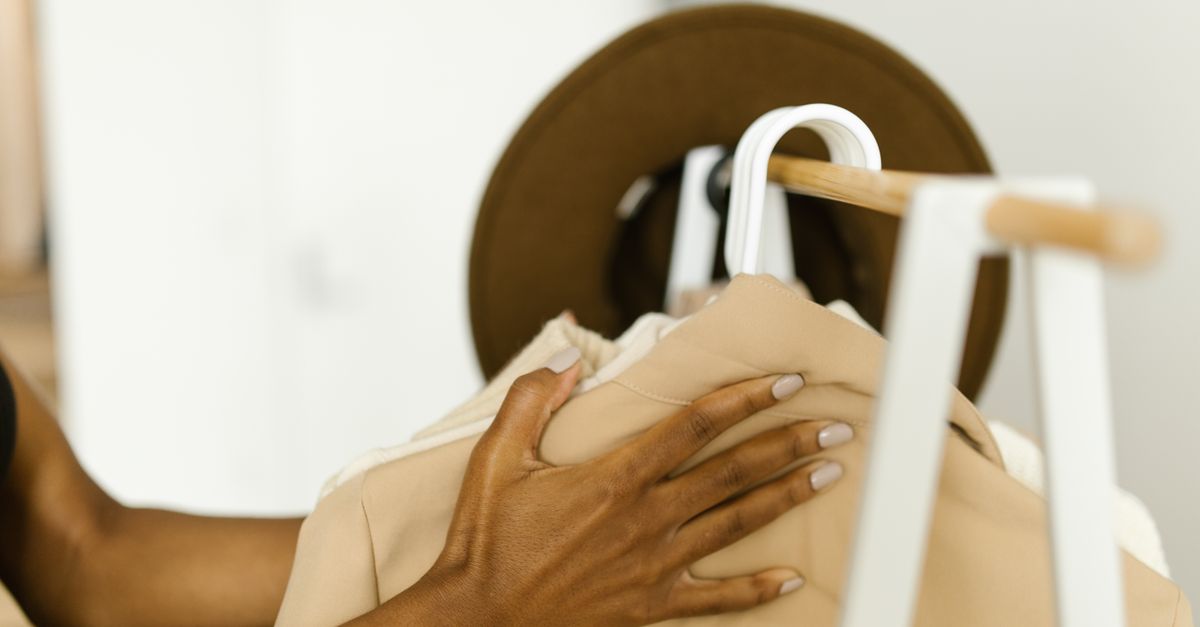
Six Months Without a Closet: What My Wardrobe Editing Revealed
The overflowing closet is a familiar problem. For years, I stared at a packed rail of clothes, a dresser bursting with items, and a laundry basket that seemed to magically refill itself. Despite the sheer volume, I often felt I had nothing to wear. Each morning was a low-grade stressor, cycling through combinations that never quite felt right, always ending up in the same familiar (and usually ill-fitting) outfits. I’d buy new pieces, convinced they were the missing link to a ‘perfect’ wardrobe, only for them to join the crowded ranks, unworn and unloved.
Then, six months ago, I embarked on a radical experiment: I emptied my entire closet. Every single item. My goal wasn’t just to declutter, but to fundamentally rethink my relationship with clothes, to understand what I truly wore, what I truly needed, and what brought me genuine joy. It wasn’t a minimalist challenge in the traditional sense, but an act of deep wardrobe editing, a process of intentional rediscovery. What I found was a surprising clarity that transformed not just my wardrobe, but my daily life and spending habits.
Key Takeaways
- Only about 20% of my clothes were regularly worn, despite having a full closet.
- Intentionality, not volume, is the true driver of a functional and enjoyable wardrobe.
- Setting clear criteria for what to keep or acquire eliminates impulse decisions and buyer’s remorse.
- My spending on clothes drastically reduced, as did the mental load of daily outfit choices.
The Real Estate of My Wardrobe: Why Volume Didn’t Equal Value
Before this experiment, my closet was a classic case of quantity over quality, or more accurately, quantity over utility. I estimated I had over 150 individual items of clothing, excluding underwear and socks. After emptying everything, I spent an entire weekend just sorting. The sheer volume was staggering. I found items I hadn’t seen in years, tags still on, forgotten purchases, and aspirational pieces that no longer fit my lifestyle or even my body.
What truly struck me was the disparity between what I owned and what I actually wore. I meticulously tracked every item I picked up over the first two weeks of the experiment, pulling from a temporary capsule I’d created. The pattern was undeniable: about 20% of my collection accounted for 80% of my daily outfits. This isn’t a new concept – the Pareto principle applies to many areas of life – but to see it play out so starkly in my own wardrobe was a revelation. Those 30-odd items were doing all the heavy lifting, while the other 120+ pieces were simply taking up space, generating visual clutter, and contributing to the feeling of ‘nothing to wear’ by overwhelming my choices.
The mistake I see most often is that we fill our closets with solutions to perceived problems: I need something for a party, I should have more work blouses, This dress will be perfect for vacation someday. These purchases often go unworn because the specific occasion never arises, or the piece doesn’t integrate with our existing wardrobe, or it simply doesn’t feel like ‘us’ when we try it on at home. My own closet was a graveyard of these well-intentioned, but ultimately unused, sartorial investments. The first critical step for me was accepting that most of what I owned was providing no real value.
Establishing the ‘Triple Threat’ Rule for Every Item
To move forward, I needed a ruthless filter. My ‘triple threat’ rule emerged organically during the early weeks of the experiment and became the cornerstone of my new wardrobe philosophy. Before any item, old or new, earned a place in my re-curated collection, it had to unequivocally meet three criteria:
- Does it fit perfectly, right now? No ‘someday’ clothes, no ‘when I lose five pounds’ garments, no ‘it’s a little tight but I can make it work.’ If it didn’t feel comfortable and flattering in my current body, it was out. This was a surprisingly liberating decision. Holding onto ill-fitting clothes only served as a constant reminder of past or aspirational selves, rather than celebrating who I am today.
- Do I love it, unconditionally? This goes beyond ‘liking’ something or thinking it’s ‘fine.’ This is about a genuine spark, a feeling of confidence and joy when I put it on. It had to be something that made me feel good, that resonated with my personal aesthetic, and that I would actively choose to wear. This immediately eliminated many ‘filler’ items purchased out of necessity or because they were on sale.
- Does it integrate seamlessly into at least three different outfits? This was the most crucial test for versatility. A beautiful top might pass the first two criteria, but if it only worked with one specific skirt, it wasn’t pulling its weight. Every item had to earn its spot by proving its ability to mix and match. This forced me to think about my wardrobe as a cohesive system rather than a collection of isolated pieces.
What changed everything for me was rigorously applying this rule. I started with my temporary capsule, then gradually reintroduced other items from my initial purge pile, testing each one against the triple threat. Many beloved items that I thought I couldn’t live without failed the third criterion. They were beautiful, but too specific, too difficult to pair, or simply too much effort. This wasn’t about deprivation; it was about efficiency and maximizing the potential of each garment.
The Unexpected Freedom of Limited Choice
The most surprising outcome of this experiment was the immense reduction in decision fatigue. With a significantly smaller, more intentional wardrobe, the morning ritual of getting dressed went from a frustrating struggle to a smooth, almost effortless process. Instead of being overwhelmed by options, I was presented with a curated selection of items that I genuinely loved and knew would look good together.
Before, I might have spent 15-20 minutes trying on different combinations, feeling increasingly frustrated. Now, I can assemble an outfit in under five minutes. This saved time is valuable, but the saved mental energy is priceless. That small daily friction had been draining my focus before my day even truly began. Now, my mind is clearer, ready for more complex decisions at work or engaging more fully with my family.
This isn’t to say I wear the exact same thing every day. Far from it. My wardrobe, though smaller, is actually more versatile because every piece is a ‘go-to.’ I have a clear understanding of the silhouettes, colors, and textures that flatter me and suit my lifestyle. This clarity allows for creative combinations within a smaller framework, making it feel expansive rather than restrictive. It’s like having a well-designed tool kit versus a cluttered junk drawer – fewer items, but each one perfectly suited for its purpose.
A New Approach to Acquiring Clothing: The ‘Intentional Entry’ Method
My spending habits on clothes have drastically shifted. Before, I was prone to impulse buys, especially during sales or when feeling particularly uninspired by my existing wardrobe. The thought process was often: This is cheap, it might work, let's just get it. The ‘triple threat’ rule, combined with the newfound clarity of my refined wardrobe, has made such casual acquisitions impossible.
Now, any new item must undergo an ‘intentional entry’ process. It starts with a clear need or a specific gap identified in my existing wardrobe, rather than a fleeting desire. If, for example, I realize I need a new pair of black trousers, I don’t just grab the first decent-looking pair I see. I consider:
- Material and quality: How well will it hold up? Is it easy to care for? Will it pill after three washes?
- Fit and comfort: Does it truly meet my exact fit criteria, without any compromises?
- Versatility: Can I pair it with at least three different tops and jackets I already own?
- Longevity: Is this a piece I can envision wearing for several years, rather than just one season?
This rigorous evaluation means I buy far fewer items, but each purchase is a considered investment. The average cost per item might be higher, but the cost-per-wear dramatically decreases because I actually wear and love everything I bring into my closet. My clothing budget, which used to fluctuate wildly, is now stable and significantly lower, typically less than a third of what it was before the experiment. This shift has not only saved money but also imbued a deeper sense of appreciation for the items I own.
Building a Flexible Wardrobe, Not a Rigid Uniform
Some might assume a smaller wardrobe means a rigid uniform, but in my experience, it has led to more creativity and flexibility. When every piece is interchangeable and beloved, creating outfits becomes a fun puzzle rather than a chore. I found myself experimenting with combinations I wouldn’t have considered before because each piece was no longer lost in a sea of options. I could clearly see the potential of each garment.
What changed everything for me was understanding that a flexible wardrobe isn’t about having more options, but about having better options. It’s about maximizing the utility and enjoyment of each item. This allows for adaptability to different occasions – from casual weekends to formal events – without requiring a specialized wardrobe for each. My current collection features foundational neutrals, like black, navy, and cream, which are easily mixed, punctuated by a few carefully chosen items in colors or patterns that I genuinely adore and that complement my existing palette. This balance ensures my wardrobe feels both cohesive and expressive.
This approach also means I’m less susceptible to fleeting fashion trends. Instead, I gravitate towards timeless styles and silhouettes that suit me, occasionally integrating a trend that genuinely aligns with my aesthetic and passes the ‘triple threat’ test. This resilience to trends protects my wallet and ensures my wardrobe maintains its relevance over time, reducing the constant pressure to buy new.
Maintaining the Edited Wardrobe: A Continuous Process
An edited wardrobe isn’t a one-time project; it’s a continuous practice. Just as I regularly prune my digital files, I now conduct a quick, seasonal check of my clothes. This isn’t a massive overhaul, but rather a brief scan to identify any items that no longer meet the ‘triple threat’ rule. Perhaps a favorite shirt has become ill-fitting, or a sweater has seen better days, or a color I once loved no longer resonates with my current style.
The process is quick and painless because the initial editing was so thorough. Any item that falls short is immediately designated for donation, repair, or responsible disposal. This prevents the slow creep of clutter from re-establishing itself. My ‘holding zone’ for potential new purchases is also short-lived; if an item doesn’t integrate within a week or two, it goes back to the store, or I rethink the need entirely.
This continuous maintenance ensures that my wardrobe remains a source of joy and ease, never again a source of stress or overwhelm. It reinforces the value of intentionality and reminds me that true style comes not from having more, but from truly understanding and loving what you have.
Frequently Asked Questions
How many clothes should a person own?
There’s no magic number. What I learned is that the ideal quantity is whatever allows you to feel you have plenty of functional, beloved outfits without feeling overwhelmed by choice or storage. For me, that ended up being around 40-50 versatile items for my core wardrobe, plus a small collection of occasion-specific pieces.
Is it better to have many cheap clothes or few expensive ones?
My experience revealed that investing in fewer, higher-quality items is far more beneficial in the long run. They last longer, often fit better, and reduce the need for constant replacement, ultimately saving money and environmental impact. My cost-per-wear dramatically decreased with better quality pieces.
How often should I declutter my closet?
I found that a major overhaul every 6-12 months is useful, but more importantly, a quick, intentional ‘check-in’ every few weeks or months prevents clutter from accumulating. The key is to address items that no longer serve you as soon as you notice them, rather than letting them pile up.
What if I need clothes for very different occasions (e.g., formal work and casual hobbies)?
The ‘triple threat’ rule still applies. You’ll likely have distinct sub-sections within your wardrobe (e.g., work attire, weekend casual, formal wear). The goal is for each item within those sub-sections to be versatile and loved, allowing you to mix and match efficiently within those specific contexts.
How do I start decluttering my own overflowing closet?
Start by taking everything out, as I did. This creates a blank slate. Then, begin with the easiest categories, like underwear or socks, to build momentum. Apply a rigorous filtering rule, like my ‘triple threat’ (fit, love, versatility), to each item. Don’t try to do it all in one day; break it into manageable sessions.
My six months without a proper closet, ironically, led me to discover the most functional and enjoyable wardrobe of my life. It wasn’t about deprivation, but about intentionality. It’s about moving from a reactive consumer to a proactive curator, understanding that true value lies not in what you accumulate, but in what you truly use and cherish. If you’re feeling overwhelmed by your closet, I urge you to try a similar deep dive. The clarity you gain might just surprise you.
Written by Lena Petrova
Relationships & Leisure
Lena, a retired educator, shares wisdom on fostering strong relationships and cultivating enriching hobbies.
You Might Also Like
Lifestyle
Secure Your Home Network After a Firmware Update Without Reconfiguring Every Device
Lifestyle
The 60-Degree Rule for Home Heating and Cooling: Why It's Often Misunderstood
Lifestyle